Initial Thoughts: Things that are coming for your soul to date: Ouija boards, dolls, penny whistles, gymnastics, rock music, and now basketball.
I’m not saying I have no tolerance for sports. I can get nearly as over-enthused about hockey as the next person. I enjoy live baseball — well, okay, I enjoy sitting in the sunshine and drinking beer while baseball happens nearby. I once cried over the World Cup (hysterical, relieved, happy tears; I should probably not be allowed to watch the World Cup, tbh).
But there are many forms of sportsball I know nothing about and do not especially wish to learn, and basketball is one of them. So I am not particularly excited about this book. Sorry.
Spoilers below the picture, as usual.
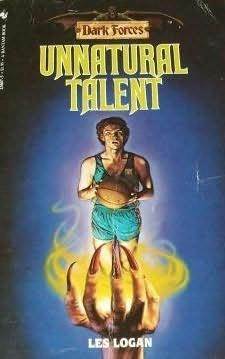
Characters:
Andrew Perry, basketball player
Cal Perry, bad father, basketball coach
Cindy Luckett, potential girlfriend, basketball player
Mark Peterson, really good basketball player
Sue Perry, mom who secretly suspects basketball isn’t all that great
Lisa Perry, kid sister
Steve Vidal, old friend of Cal’s from his university basketball days
Reverend Westerbrook, a reverend
I am already nearly comatose, and have typed the word “basketball” so often I can’t tell if I’m spelling it right. Help.
Recap: Andrew Perry is at his locker, reflecting on how his father, a basketball coach, has actually moved the entire family to the small town of Ashton (wait…Ashton?) to give Andrew a chance to be a starting player. To repeat: Andrew wasn’t good enough to be a starting player for the “prestigious Fresno team,” so his father gave up that job and took one coaching in a smaller town.
Holy freaking shit, these people are seriously over-invested in high school basketball.
Cindy Luckett, a tall (everyone in this is tall, because basketball) redhead, is watching Andrew from across the hall. She comes over to talk to him, complimenting him on his morning cross-country practice, and he dismisses running as something “anyone can do” and infinitely less important than basketball.
Later Andrew hangs out with Mark Peterson, a senior who is captain of the basketball team. Mark seems like a perfectly nice, well-rounded guy, with plans to attend the Air Force Academy after high school. But Andrew thinks of Mark as “exactly the kind of person…that Cal Perry would have chosen for a son.” (p.6)
While at Mark’s house, Andrew finds out that Cindy plays for the girls’ team, so now his confidence is even more thoroughly shot. He joins the camera club to spend some time adjacent to her, but is afraid to ask her out, because he’s not sure he’ll be a basketball star even at his new, smaller school.
There was an in-crowd here, just as there’d been an in-crowd at Fresno, and that crowd, Andrew decided, would never accept him unless he proved himself on the court.
p. 13
Andrew is highly skilled at creating his own problems.
Anyway. He walks home down a rundown side street and finds a tiny creepy store, which readers will immediately and correctly predict won’t be here the next time he looks for it. An old woman with “the black eyes of a cobra” scares him by asking if she can help him, so he randomly grabs a magazine and buys it.
Except when he gets home it turns out to be a pamphlet called “Magic Rites of This World — and the Next!”
On Saturday for the first time we see Cal Perry interact with his son, and holy hell, no wonder Andrew has no self-esteem. Cal suggests they practice set-up shots (I don’t actually know what these are), but when Andrew says he has plans with Mark Cal is overjoyed.
But Cal Perry wasn’t disappointed. He was smiling, proud that Andrew had become friends with Mark Peterson. It was just the kind of friendship his son needed, Cal thought.
Reading this thought in his father’s face, Andrew felt even worse. Why had he told Mark he’d go to the mall with him anyway? Everyone would be at the mall on Saturday afternoon. What if they looked at him the way his father was looking at him now — as if he were no one special at all, just a friend of Mark Peterson’s?
p. 20
Even assuming some of that is Andrew over-reacting (this is, after all, the guy who’s convinced himself Cindy won’t like him unless he’s a sportsball hero, even though she’s said absolutely nothing to create that impression), still. That was painful to read.
We get several pages of Andrew feeling inferior to Mark at the mall (and Mark being kind of a jerk towards girls), and it’s honestly a relief when Andrew spends Saturday night in his room, furtively reading the Magic Rites book and longing to succeed on the court. Like, it literally feels marginally healthier than the rest of his day.
The next day Andrew is in church, bored, sweltering, feeling as if he’s suffocating, and blaming the book for that last part. He has no choice but to attend church because of his father’s “unwavering faith,” so basically being in this family requires you to love basketball and Jesus, possibly in that order.
Andrew feels excited and uncomfortable to be thinking about the book in church (wait, is the spellbook a metaphor for porn?) — and then he thinks he sees the old woman at the back of the church. She vanishes, but Andrew feels sick and sweaty, and can’t make eye contact when shaking hands with the minister on the way out.
Thanks to this series I can confidently diagnose the early stages of possession.
Sunday dinner in this household sounds like literal hell.
“Got to eat up,” his father said, helping himself to another spoonful of lima beans. “I know you’re not officially in training yet, but –“
“I know, I know,” Andrew said. He had heard the lecture a thousand times. “For a real athlete, training is a three-hundred-and-sixty-five-day-a-year proposition.”
“Right,” his father said heartily.
But Andrew couldn’t bring himself to eat. Not even to please his father.
p. 32
So Andrew goes for a bike ride to a secluded part of the beach, and daydreams about throwing the book into the sea. He ends up spending the day with Cindy, who’s out shooting pictures. For some reason he convinces himself that the book’s “luck” is responsible for the great day he’s had.
That week in school Cindy shows him a photo that she took without his knowing: Andrew, alone on the beach, with a shadow in the shape of a broken cross on his shoulder.
Cindy’s busy next weekend, so he decides to spend some time with the spellbook. I mean, I know I always turn to the dark arts when I have no one to hang out with.
Andrew practices shots in his driveway; his mother, seeing his grim expression as he plays more and more badly, thinks about how if it were up to her she’d get rid of the hoop in their driveway. So she recognizes the problem, sort of, but doesn’t intervene to stop her husband from pressuring their son.
Andrew turns down the chance to play basketball with Mark out of insecurity. That night he dreams about playing basketball really well, and wakes to find his desk drawer (where he keeps the spellbook) open, and thinks he sees the old woman from the store lurking in his bedroom. I’d get rid of the spellbook at this point.
Several pages of basketball drill later, during which Andrew watches Mark playing really well, we get this:
Then Cal Perry rearranged the squads and began again. This time, Mark Peterson was on one side and Andrew was on the other. Again, Andrew saw his father’s eyes tracking Peterson across the half-court.
“See, son,” his father said, sitting down beside Andrew, “That’s how it’s done. That’s the way to do it.”
Andrew felt a swift, stabbing pain. He turned to his father, who was still staring at Mark Peterson.
I bet he’d give anything, Andrew thought, if Mark was his son instead of me.
p. 52
Holy freaking psychological abuse. No wonder demons are moving in on this poor kid.
That night while his family are asleep, Andrew does some chanting and backwards-circling of his desk, and by now I don’t blame him.
The book, playing fair, warns him that if he summons a “guiding spirit” it will remain on earth forever. He doesn’t like that idea, but decides it’s worth it if he can become a star basketball player and make his father proud.
Mark attends the first girls’ basketball game of the season, to support Cindy. This book does a good job of pointedly reminding us that the girls’ games are never as well attended as the boys’, so they appreciate their few fans but are determined to play their best even without much acclaim.
While he’s there, “the most beautiful girl he’d ever seen” sits next to Andrew and asks him a bunch of dumb questions to get his attention. It is immediately clear (to the reader, not Andrew) that this is the spirit he summoned.
She knows his name, and he’s way too relaxed about just assuming she knows him from somewhere, maybe Fresno. And then he confides everything about his relationship with his father and his desire to be a basketball star. Then she vanishes while he’s momentarily re-absorbed by the basketball game he’s supposed to be watching.
The next week (I think), Andrew is placed in the starting line up by his father the coach; tries too hard, like a lot too hard; misses a load of shots; and loses the game. Ouch. It’s very obvious, even when you know nothing about basketball, that most of his problem is that he’s tense and agitated, and then mad at himself for playing badly, which makes his efforts increasingly wild and doomed to failure.
Even more painful than losing the game: he overhears his father telling Mark (who’s briefly sidelined with an injury), “we haven’t got a hell of a lot to work with out there.” Then he pulls Andrew out of the game and puts Mark back in.
I can totally understand why this kid is summoning demons.
Andrew heads off angrily on his bike and winds up at the same cove where he and Cindy hung out. He falls asleep, and wakes to the beautiful girl-demon saying, “So here you are.” There’s some POV/order of events confusion about her name:
He stared at Angela.
….
“Of course I did.” Angela nodded. “You called me, and I came to you.”
….
“I don’t even know your name,” he argued. “How could I have called you?”
She laughed. “Oh, knowing my name isn’t important. But, if you must call me something, you can call me Angela.”
“Angela?”
“Mmmm,” she said, as if making up her mind. “Yes, Angela. I like that.”
p. 73
Anyhow, she promises to make him the best basketball player ever, and kisses him–but mid-kiss his mouth fills with a horrible taste and Angela starts emitting a foul smell, and her blue eyes are now black. Standard demon boilerplate, nothing to worry about.
She kills a seagull using, I don’t know, evil telekinesis, and informs Andrew his part of the bargain will be to do whatever she says.
Ha:
Only one set of footprints, his own, showed in the sand. Angela had vanished.
p. 78
Not exactly the version every 80s grandmother had on a fridge magnet.
Andrew goes home and his father forgives him for walking out of the game holy crap I hate him. He’s way more the villain of this book than the ACTUAL DEMON.
Andrew decides to take the spellbook back to the old woman, but to absolutely no one’s surprise except his, the creepy corner store isn’t there any more.
He sees someone burning trash, and decides to toss the book on the fire. But it turns out to be the black-eyed old lady who sold him the book in the first place, and now he recognizes her eyes. It’s Angela. Even though I’d guessed they were the same person back when Angela’s eyes turned black, this was still a scary, unsettling scene. If I’d read this as a child it would have terrified me.
He dreams he’s drowning, and wakes up in his room. Then he thinks his sister is calling for help, but when he bursts into her room he wakes her up. Angela shows up when he returns to his own room, and he tries to tell her to stay away, but she ominously promises to show him how much he wants the things she can give him.
I thought from all that she’d go after Lisa, his sister, but instead she attacks Cindy at a basketball game, choking her with her own gold chain. To end the attack, Andrew promises to do whatever Angela wants.
Meanwhile his mother has noticed something is wrong, but she doesn’t know what, only that Andrew looks terrible. In fairness, she’s inside the Dark Forces universe, unlike those of us on the outside devouring stacks of these books and becoming really quick to accuse people of being possessed.
Andrew’s father doesn’t put him in the starting line-up for the next game, and for convoluted reasons Andrew is relieved.
If he didn’t play, she wouldn’t get the chance to make him a star. And if she didn’t make him a star, then she couldn’t lay claim to his soul, could she? That was the thin thread of hope Andrew took with him to the gym auditorium on Friday night.
p. 10
So of course somebody (who doesn’t show up on film) shoves Mark Peterson during the game, and Mark falls and breaks his patella, “ending” his basketball career.
Andrew ends up playing, reluctantly but brilliantly, while Cindy photographs the game (this is important). He sets the record for longest basket in a high school game, and ends up in papers all across the country. Gee willikers, etc.! Presumably people who aren’t me would be impressed by this.
Andrew’s snapping at people, and he feels invisible burning talons digging into his arm, but the important thing is that his father is happy to show him off to an old friend, Steve Vidal. Steve’s in town to help Reverend Westerbrook on a project, so it looks like the cavalry’s here.
Next Friday night Cindy shows up at the game with Mark’s lucky pin, which he’d asked her to give to Andrew.
Andrew stared at the pin. It hadn’t brought Mark much luck last Friday night, had it? Angela’s power was stronger than any silly charm. “Thanks, Cindy,” he said flatly.
p. 127
He plays supernaturally well, and also breaks some guy’s ribs during the game.
But he wanted more — more of something he couldn’t quite describe. Restless desire filled him as he thought back over the game. Knocking that guard in the ribs had felt wonderful, he remembered. Suddenly he wanted to get that feeling back again — to hear the crack of bones snapping beneath his powerful touch. That was what his desire was all about, he decided. And he would have to find a way to satisfy it.
p. 141
A week later he takes Cindy to a dance, gets roaring drunk, and then tries to attack her on the way home. Cindy, trying to break free of his inhumanly strong grip (and overwhelming stench), sees his face and it looks “blackened and withered” and generally not attractive. Her scream startles him enough that she gets away.
Andrew heads to the beach, where he tries and fails to drive off a cliff. He gets home and showers, just in time for his family to be getting home from church. His father accepts Andrew’s excuse of being hung over, even though he is CLEARLY possessed you absolute MORON.
And then Steve Vidal and the Reverend Leland Westerbrook show up.
The reverend can hear a demonic voice warning him to get away, and feels a “cold, invisible force” when Andrew enters the room. So he’s probably the least surprised of anyone when he reaches out to shake Andrew’s hand and Andrew bites him.
Andrew bolts from the house, and is picked up by the police on Monday night. While he’s missing, Cindy shows up with the photos she took at the game, all of which show Andrew looking dead with a black shadow hovering over him. Reverend Westerbrook explains that Andrew is experiencing demonic possession and will require an exorcism, so they do that for all of chapter twenty-four.
In the last chapter literally everything is fine. It would be an understatement to say the exorcism worked. Andrew is free from the demon, and also no longer obsessed with basketball, recognizing it as a relatively small but enjoyable part of a full life. His father asks for, and receives, his forgiveness. Andrew apologizes to Cindy, and they start going out. It turns out Mark’s injury wasn’t as bad as it initially appeared, and although he’s less graceful and more stiff (shut up) than before he can still play basketball; Andrew sets up the shots, and he sinks the baskets.
Final Thoughts: I imagine the plans for this series were to create a bunch of tamer versions of The Exorcist, suitable for young readers, and the last couple have definitely fit the bill. This would genuinely have scared me when I was ten or so. Even now, reading it as an adult, it gave me mild chills, and that in spite of every second word being “basketball.”
 The Mummy Reads